-

Nigeria says working hard to resolve gasoline crisis

In a chat with Nigerians from all walks of life on Sunday evening during the stopover, the Vice President noted that the Federal Government was moving as quickly as it could to solve the fuel crisis and reduce the difficulties Nigerians were facing as a result.

How Jonathan’s officials, cousin shared 27bln proceeds of PHCN sale -EFCC

The Economic and Financial Crimes Commission (EFCC) has narrated how top government officials under the administration of former president Goodluck Jonathan shared 27 billion, part of the proceeds of the sale of Power Holding Company of Nigeria (PHCN) in 2014.

- Nigeria unemployment rate climbs up

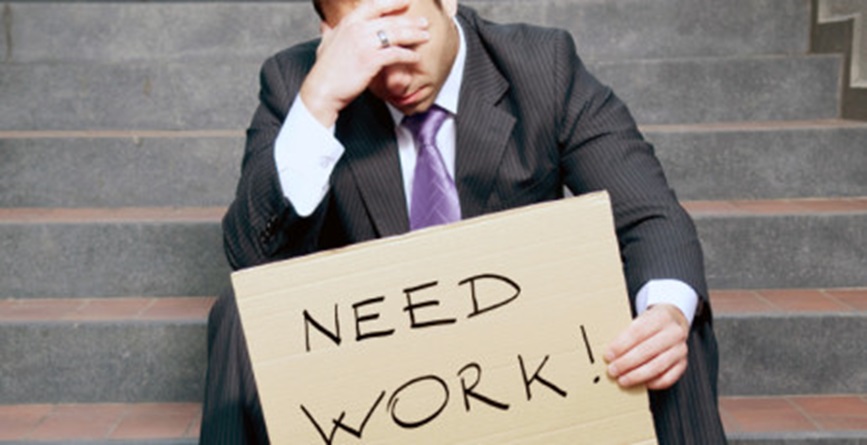
Four out of every ten people in Nigeria's workforce were unemployed or underemployed by the end of September, National Bureau of Statistics (NBS) said on Friday.

Why is Jerusalem important, what makes Donald Trump's intervention so toxic

What is the status of Jerusalem? Israel set up its parliament in West Jerusalem when the state of Israel was proclaimed in 1948. The move followed the United Nations’ vote to partition Palestine on the basis of the British pledge known as the Balfour Declaration that paved the way for a homeland for the Jewish people.

- Nigeria's dollar reserves at $34.53 bln as of Nov. 24

Nigeria’s foreign exchange reserves stood at $34.53 billion as of Nov. 24, up nearly 3 percent from a month earlier, central bank data showed on Thursday. The bank did not provide a reason for the increase in reserves, which stood at $33.58 billion at the same date last month.

Thursday, 7 April 2016

Nigeria's frozen food dealers hit by forex restriction

Frozen fish and other seafood may soon become scarce in Nigeria's markets beacuse of the foreign exchange restrictions placed on certain items by the Central Bank of Nigeria (CBN) in its bids to conserve dollar and curb declining foreign exchange reserves in Africa's biggest economy.
Frozen fishes
According to some dealers in imported seafood and other frozen items, there had been no importation of the items since February and over 80 percent of cold rooms, especially in Lagos, had been shut, while about 75 per cent of workers in the sector had been laid off.
It was also learnt that in spite of the permits issued by the Federal Ministry of Agriculture for importations of about 520, 000 metric tonnes of fish this year, the forex restriction has been the major hindrance.
Some importer said fish and other seafood are among about 41 items listed by the central bank as ineligible for forex at its official interbank forex market, making access to forex difficult for the importers of seafood and other essential goods into the country.
“Since February, nobody has received ‘Form M’ from the CBN; so, automatically, the allocation is useless. The industry is on the verge of collapse. Fish is not valid for forex and the CBN has also refused to approve the ‘Form M’ after we have sourced our funds from elsewhere,” the source said.
According to findings, almost every frozen fish consumed in the country presently is smuggled through the land borders, as most people, especially retailers, are currently getting their supply from Cotonou, Benin Republic.
Information obtained from the Nigerian Ports Authority’s daily shipping position indicated that between March and April 5, 2016, of all the vessels coming into the country, only one brought in frozen fish into the Lagos port complex; one in Port Harcourt and another one to the Delta port complex.
A cold room owner in the Oshodi area of Lagos, Mrs. Charity Iweala, told our correspondent that many operators in the sector had lost their jobs, while more were expected to lose theirs if the trend continued.
“The situation has worsened; cold rooms are empty and people are losing their jobs because there is no more work for them to do. I was one of the few people that got importation quota but we can’t import; no bank has opened ‘Form M’ for any fish importer for several months now,” she said.
According to Iweala, most of the fish imported into the country are sourced from the wild waters and cannot be bred locally.
It is estimated that the demand for fish in the country is about 2.6 million metric tonnes with a per capita consumption of 13.5kg, while the country currently has a total local fish production estimated to be around 600,000 metric tonnes per annum.
The immediate past Minister for Agriculture and Rural Development, Mr. Akinwumi Adesina, had at the inauguration of the Special Growth Enhancement Support programme, said the importation of fish was not a good business for the country given its huge natural resources.
The President, Association of Indigenous Seafood Operators, Mr. Lamina Rasheed, said the refusal of the CBN to ease the process of importation would lead to a food crisis.
*First published by Punch Newspaper

Nigeria's president gets 2016 budget from parliaments amid buck passing

Nigeria's parliament on Wednesday submitted the long overdue 2016 budget bill to President Muhammadu Buhari for additional checks at his request, with lawmakers blaming delays on the government for its "sloppy" work on the bill.
Buhari withdrew his original budget bill in January because of an unrealistic oil price assumption and flaws in the draft. Lawmakers approved an amended proposal last month but only submitted highlights, rather than the whole document, to the president's office.
President Buhari

This prompted Buhari to say he would only sign the bill after checking it "ministry by ministry", and requested lawmakers to submit the document in its entirety.
Nigeria, Africa's biggest economy, is facing its biggest crisis for years after oil revenues, which make up about 70 percent of national income, slumped along with global oil prices.
Abdulmuminu Jibrin, who chairs the budget committee in the lower house, told reporters late on Wednesday that the bill had been submitted the executive.
He later issued a joint statement with his counterpart from the upper house, Danjuma Goje, in which they said that "most of the figures simply did not just add up".
The task of balancing projected revenue and spending was "made very difficult by the sloppy manner in which the 2016 Appropriation Bill was prepared by the executive," they said.
Last month the information minister said there was no rift between the executive and legislature on details of the budget.
Nigeria has said it wants to raise about $5 billion abroad to cover part of its 2016 budget deficit which could be as high as 3 trillion naira ($15 billion).
The president's spokesman on Wednesday said Buhari will, during a visit to China next week, sign a deal for a loan to help fund infrastructure projects. He did not disclose the sum involved.
Nigeria has also said it wants to raise $1 billion from Eurobond investors, however no deal has been announced.
*First published by Reuters

Tuesday, 5 April 2016

NIGERIA'S UAC suspends share raising plans

Nigerian conglomerate UAC group has suspended a planned rights issue due to a weak equity market and shareholders had rejected a proposal to issue preference shares via a private placement, Chief Executive Larry Ettah said on Tuesday.
Ettah said the capital raising would happen at subsidiary levels and the UAC group would fund its own subscription from internal cash flow.
Ettah said its property unit, UPDC, will raise 5.6 billion naira ($28.16 million) via a rights issue and 24 billion naira via commercial paper to lower its funding costs. Two other units, Livestock Feeds will sell 1.1 billion naira in shares and Portland Paints will sell 2 billion naira in shares.
"The days of $1 million apartments are behind us," he told an analysts' call, referring to its luxury property development.
"We are looking to recalibrate our development towards the retail segment."
UAC group with interests in food and restaurants, agricultural feed, paints, logistics and real estate, posted a 43.6 percent fall in pretax profit for 2015 at 7.94 billion naira.
Shares in the UAC group ended flat at 19.43 naira while its agricultural unit Livestock Feeds dropped 4.76 percent to 1.0 naira. Both underperformed the broader share index, which was up 0.42 percent on Tuesday.
Ettah said 2015 was a tough operating year for UAC due dollar shortages in the forex market following a currency devaluation, coupled with slower economic growth due to the lower price of crude, Nigeria's main export commodity.
UAC plans to diversify its group into retail and consumer segments, which Ettah expects to account for 60 percent of its business, up from 15 percent now.
"The economy was growing at 7 percent and now its growing at a lower rates and that affects how our business does. We have tried to maintain volume growth rather than price increases because we recognise the weak condition of the market," he said.
*First published by Reuters

Angry motorists queue for fuel across Nigeria

Angry motorists queued overnight at petrol stations across Nigeria and lines of cars blocked traffic in the commercial capital Lagos on Tuesday as the worst fuel shortages for years hit Africa's top oil producer.
Vehicles queuing for fuel
President Muhammadu Buhari was elected in March 2015 on a ticket to end the mismanagement and corruption that have kept many of the 180 million people in Nigeria in poverty, despite the country's oil wealth.
But a slump in oil revenues after a slide in global crude prices has plunged the Africa's biggest economy into its worst crisis for decades, with the supplies of dollars needed to pay for fuel and other crucial imports drying up.
Buhari's All Progressives Conference party (APC) and ministers have come under fire for not getting agreements in place quickly enough to swap Nigeria's crude oil for fuels such as gasoline, and keep vehicles running.
"We've slept here in the queue since yesterday night but there is no fuel," said Thomas Udoh, a driver in a queue for a petrol station stretching for kilometres in Lagos.
"I voted for APC for change, but ... is this the change? This is very painful," Udoh said.
Many people did not make it to work in Lagos on Tuesday, a sprawling metropolis of more than 20 million people, with even some small side streets jammed by queuing cars.
Despite pumping 1.8 million barrels of oil a day, Nigeria imports most of its fuel as its outdated refineries are often out of action. Analysts say fraud at a subsidised petrol scheme is also leading to the shortages that have steadily worsened.
Nigeria has often been hit by strikes by unpaid oil marketers hampering supplies, but these disruptions have usually been fixed by the government relatively quickly.
This time the crisis has dragged on for more than a month and the situation has deteriorated in the past few days, despite assurances by the state oil firm head Emmanuel Ibe Kachikwu, that the queues would disappear this week.
Last week, he said the Nigerian National Petroleum Corporation (NNPC) had reached deals with international oil companies for them to help provide hard currency to fund fuel imports, but motorists had little faith in a quick fix.
"The whole thing is not working out, you can see there are queues everywhere," said Ankele James, an accountant in Lagos stuck in a queue for fuel. "I have been here since yesterday."
*First published by Reuters

Nigeria Oando shares drop 5 pct after bank places loan on watchlist

Shares in Nigeria's Oando dropped 4.9 percent on Tuesday, a day after local lender Fidelity Bank said it had placed loans granted to the energy firm on a watchlist.
Shares of Oando, which is also listed in Johannesburg and Toronto, fell to 4.28 naira in Lagos by 1158 GMT, adding to a 24 percent slide so far this year. The shares fell 63.4 percent last year.
Image result for oando wale tinubu
Tinubu, Oando ceo
Fidelity Bank said on Monday it had put a 22.4 billion naira ($113 million) loan to Oando on a watchlist and taken a special provision of 5 percent, in line with a central bank directive to several commercial lenders exposed to the energy firm.
The mid-tier commercial lender said on an analysts' call that the Oando loan accounted for 3.7 percent of its total loan book and 15.2 percent of its energy loan book, head of strategy, Gbolahan Joshua said.
Joshua said the loan to Oando has not been classified as non-performing but that the central bank had advised commercial lenders including Fidelity Bank exposed to the energy firm to make a special provision of 5 percent.
Fidelity said it lent 14.9 billion naira to Oando Marketing and 7.5 billion naira to Oando Energy services Ltd.
"The central bank is taking a prudent view. It has given a deadline for Oando and the banks to come back with a structure ... including disposal of assets," Chief Executive Nnamdi Okonkwo said on the call.
Shares in Oando were down 1.75 percent after Fidelity said it had put the loan on its watchlist.
Oando has agreed to sell its downstream business to oil trading group Vitol and said it would sell its power and gas subsidiaries and raise up to 80 billion naira through a rights issue after reporting a record loss of $1.10 billion for 2014. Oando is still due to post results for 2015, having reported a $246 million loss in the nine months to September.
Oando paid $1.5 billion to acquire ConocoPhillips' Nigerian assets in 2013, when oil prices were at a peak. But high financing costs coupled with the plunge in oil prices have hit profits, despite an increase in production volumes.
Fidelity said it had taken the Oando charge against profits, making a provision of 1.1 billion naira. Fidelity's 2015 pretax profit fell 9.6 percent to 14.02 billion naira.
"Once the whole Oando scenerio is resolved it becomes a positive for us," the bank said.
Okonkwo said assuming Oando's loans were to be classified its non-performing loan ratio would hit 8.1 percent, from 4.4 percent.
Fidelity missed its loan growth target for 2015, which it had originally put at 10 percent, with the actual rise last year 6.7 percent, down from a 27.1 percent growth rate in 2014, Okonkwo said.
It aims to expand lending by between 5 to 7.5 percent this year.
*First published Reuters

Nigeria to auction 110 bln naira in bonds next week

Nigeria plans to raise 110 billion naira ($553 million) in local currency denominated bonds on April 13, the Debt Management Office (DMO) said on Tuesday.
The office said it will sell 50 billion naira of a bond maturing in 2036, 40 billion of paper maturing in 2026 and 20 billion of debt maturing in 2020, using the Dutch auction system.
Results of the auction are expected to be released on the following day.
All the bonds on offer are reopenings of previous issues.
On Monday, the debt office said it plans to raise between 274 billion and 365 billion naira this quarter in local currency-denominated bonds, with maturities ranging between five and 20 years.
Africa's biggest crude exporter issues sovereign bonds monthly to support the local bond market, create a benchmark for corporate issuance and fund its budget deficit.
Nigeria said it will borrow about 900 billion naira locally to finance part of the 2.2 trillion naira deficit in its 2016 budget.

Nigeria targets elusive small traders in new tax drive

Sewing hair extensions to the plaits on a middle-aged woman's head, Nigerian hairdresser Bridget Okoidegun is not sure how much tax she pays -- something the government plans to change.
The owner of a small salon in Lagos could soon find herself on the hitlist of officials who have started cracking down on the small traders who account for almost half of Africa's biggest economy but don't pay taxes.
Adeosun, Finmin

President Muhammadu Buhari wants to squeeze the sector to boost tax revenues by 33 percent this year to offset a slump in oil revenues that has plunged Africa's top crude producer into its worst crisis for decades.
Authorities in Lagos, a city of 21 million where one-room businesses are everywhere, are sending officers out on street patrols to register entrepreneurs and make them pay tax for the first time.
But the case of Okoidegun, who employs four stylists and charges customers up to 5,000 naira ($25)a time, shows the challenge they face. As few Nigerians benefit from the country's oil wealth, most entrepreneurs spend what they earn in order to survive and do not keep accounts.
"I don't really know how much I make," the 46-year-old said, raising her voice above the noise of the generator that keeps the fan turning overhead.
"Any money I make, either I use for school fees or usually to take care of one thing or another," said the mother-of-four. As for taxes, she said they were supposed to be part of the 800,000 naira ($4,000) she pays her landlord every year.
To hammer home the message of change, Lagos state -- which generates a third of Nigeria's $500 billion GDP -- has set up a special court to try those chased down by a new "Rapid Tax Prosecution Unit".
Large firms have begun receiving phone calls from officials demanding tax returns. The Federal Inland Revenue Service (FIRS) has used full-page newspaper adverts to warn that companies that fail to file will be punished after April 1.
"Prosecution and jail term for defaulting tax payers will be a tool that we will be actively using," Lagos state attorney general Adeniji Kazeem said. "Tax officers ... will be very aggressive."
As a result, Lagos state tax collections rose by 12 percent in January, officials say. For 2016, the government has set the FIRS a tough target of raising 4.95 trillion naira ($25 billion) in taxes, up from 3.73 trillion last year.
"Really, there is no room for failure. Please ensure you deliver," Finance Minister Kemi Adeosun told tax officers in February. "The nation will depend on FIRS to fund the budget."
GPS TO TRACK FIRMS
Buhari appointed Babatunde Fowler head of FIRS after he proved an effective tax chief in Lagos, where in the four years to December 2012 monthly tax revenues surged by 70 percent.
But tracking down small businesses is hard. Okoidegun's salon is a converted living room with three chairs placed in front of mirrors and walls adorned with synthetic and human hair for sale.
The streets outside, in the upmarket Victoria Island district, are filled with similarly makeshift enterprises beyond government control, from roadside eateries and fruit stalls to motorcycle taxis weaving through traffic.
In 2015, Nigeria had 37 million informal sector businesses which employed 60 million people or 84 percent of the workforce, said Yemi Kale of the National Bureau of Statistics.
His officers use GPS technology to map shops and other small firms street by street to help direct tax officers. But stricter rules may not be enough to increase tax revenues.
"Formalising the sector requires offering incentives to them to enter the formal system and pay taxes," said Kale, citing the example of farmers being given fertilizer and other subsidies if they register their business and pay taxes.
To encourage cooperation, Buhari's government plans an "enlightenment" campaign to persuade small-scale entrepreneurs of the importance of paying tax.
The tax problem is not new. Under Buhari's military administration in the 1980s a poster in a government office urging people to "Join the good Nigerians, pay your taxes" was defaced by somebody who had crossed out the "s" in Nigerians.
CREDIT RATING
For the future, Nigeria must get a grip on tax and the informal economy to avoid jeopardising its credit rating.
In 2014, Nigeria overtook South Africa as the continent's biggest economy. But two years on parts of the economy are drifting off the official books.
A dollar shortage has forced firms onto the black market to find hard currency to fund imports, pushing transactions outside the banking system and beyond the reach of tax authorities.
Buhari has resisted calls to devalue the naira, which might attract investment and bring in dollars.
"The sooner Nigeria puts in place reforms aimed at safeguarding its formal economy – through the adoption perhaps of meaningful business climate and FX market reforms – the more it is likely to reassure on its long-term creditworthiness," Razia Khan, Standard Chartered Bank's chief Africa economist, said in a note.
*First published by Reuters