-

Nigeria says working hard to resolve gasoline crisis

In a chat with Nigerians from all walks of life on Sunday evening during the stopover, the Vice President noted that the Federal Government was moving as quickly as it could to solve the fuel crisis and reduce the difficulties Nigerians were facing as a result.

How Jonathan’s officials, cousin shared 27bln proceeds of PHCN sale -EFCC

The Economic and Financial Crimes Commission (EFCC) has narrated how top government officials under the administration of former president Goodluck Jonathan shared 27 billion, part of the proceeds of the sale of Power Holding Company of Nigeria (PHCN) in 2014.

- Nigeria unemployment rate climbs up

Four out of every ten people in Nigeria's workforce were unemployed or underemployed by the end of September, National Bureau of Statistics (NBS) said on Friday.

Why is Jerusalem important, what makes Donald Trump's intervention so toxic

What is the status of Jerusalem? Israel set up its parliament in West Jerusalem when the state of Israel was proclaimed in 1948. The move followed the United Nations’ vote to partition Palestine on the basis of the British pledge known as the Balfour Declaration that paved the way for a homeland for the Jewish people.

- Nigeria's dollar reserves at $34.53 bln as of Nov. 24

Nigeria’s foreign exchange reserves stood at $34.53 billion as of Nov. 24, up nearly 3 percent from a month earlier, central bank data showed on Thursday. The bank did not provide a reason for the increase in reserves, which stood at $33.58 billion at the same date last month.

Showing posts with label Executive Brief. Show all posts

Wednesday, 5 August 2020

CHURCH BUSINESS: Every leader needs communication skill

By Oludare Mayowa


“What you say can preserve life or destroy it; so you must accept the consequences of your words.” - Proverbs 18:21

“Let my words and my thoughts be pleasing to you, LORD, because you are my mighty rock and my protector.” - Ps 19:14


Our words are so powerful; it can kill or bring to life, it can create deep wound or heal wounds. Our word can lift up souls or bring it down, it can encourage many, same way it can discourage many. It can draw people to us and also drives them away from us.
Though no one can be adjudged master in communications but we can aspire to become skillful in the way we use words rightly to inspire people around us. We can intentionally develop our communications skill to help produce effective result in our ministry and life. We can also develop the consciousness to ensure that our words communicate appropriately our intention, purpose and motive in such manner that our audience is well saturated with the understanding that our words bring to them.
The present generations is more sophisticated and are better exposed compared with the past generation, so leaders should learn to understand their ways first before reaching out to them in words. This generation can discern and read between the lines whatever leaders are communicating with them; they are intellectually developed and exposed to the extent that they have access to more information often than some leaders do today.
The advent of technology has also created wider access to information that it behooves on leaders to up their games and refresh their knowledge, otherwise they would be out of tune with the reality of their time.
Leaders should therefore continuously perfect their communications skill and develop the appetite for knowledge as part of tools they require to impact the lives of their followers/congregation/audience and ensuring they flow with their messages and are blessed always.
Leaders must learn to communicate with clarity, not reactive and not with sentiments and should not mix emotions with their messages, because that only last for a while and after sometimes, the reality is down on the people and they usually go back to their previous habit.
As church leaders, there are ample examples from Christ, who is the master of communications and had his way with the appropriate words for the right season. When He chose to speak in parable, those parables are meant to conveying imagery in the minds of His listeners. And whenever he perceived that they do lack the comprehension of his messages, He still find a way to break it down for His disciples to understand.
Case study:
The Samaritan woman at the Sychar well John 4:7-26
The woman caught in adultery John 8:1-11
As leaders, we need to weigh our words, consider their implications on our audience, the purpose it is meant to achieve and our primary motive for saying what we want to say before we deliver it.
We must understand the significance of our word and messages, once spoken cannot be taken back, so we should not create room for “I don’t really mean that” or “I will like to take back those words.”
Our words should build bridges and not division, promote relationship and not scattered. Our words should bind wound and not open it up, it should boost morale and not demoralizing it.
We should understand that every word counts, there is no unimportant words, even jokes could depict our mindset and be translated to mean our unspoken intention. The word of God warned us that there should be no obscenity, foolish talk or coarse joking, which are out of place,
How to improve on our communication
Leaders should learn to listen more than talking and if we must talk we should think through our word before speaking.
Pray for Holy Spirit guidance, the Bible says the spirit searches all things, if we depend on the Holy Spirit, He will give us the right word for the right season.
Leaders should learn to read books on varieties of subjects and works of other great leaders to help them understand how they construct the flows of their words.
The Bible is replete with Jesus’ examples of effective communications, apart from studying the Bible for the purpose of preparing our sermons; we should also study it for syntax, flows, prose, uses of figurative words and to gain insight into Jesus motive when communicating.
What we feed our inner man with tends to reflect in the word we speak at all time, so the question that should preoccupy our minds always is that what manner of ‘food’ you are feeding your inner man as leaders. Who are the people you usually talk with, what types of conversations you engage with your close allies and what do you constantly look at or watch on the television.
What we read, watch and meditate upon have greater influence on the way we speak, so we should be careful what we allow into our system.
The way to gain the confidence of your followers is to learn to engage them through positive and effective communications. As part of your engagement with your congregation, you must also learn the current register of the language they speak and flow with them without necessarily deploying vague and repulsive words. In the Bible days, Jesus conveys his messages through imagery related to agriculture, which provided the right picture His audience could relate with, but should we persist in using the same lingo today, no. Leaders should be adoptive and be conversant with the current register of relevant words and make use of them copiously to illustrate their messages to their audience for clarity and
There are words you are not expected to use as leaders while speaking to either your congregations, in informal communications or even within the conferment of your house. Watch out for those words and avoid them like a plague, because if you don’t identify and do away with such words, they might hurt you and the people you are leading.
Never use words that convey your lack of confidence in the authenticity of your words or the message you are preaching; such words could undermine your integrity and your competence to speak authoritatively on the subject matter.
I have heard some church leaders telling their audience that; “I am not lying to you, I am speaking the mind of God” and I am like, you just gave us reason to doubt your words. There are some who will come on the pulpit to say; “If I am wrong, kindly correct me, but I am sure I am telling the truth.” The reaction such a leader will get is to create more doubt about his or her competence; while the audience could think if you are not sure, why talking or saying it?
Code of communication for leaders
Eph 4:29, Matthew 12:35, Col 5:37,
I will also refer you to the four-way test of the Rotary club, it can be of help in shaping and sharpen our communications skills.
The Rotary four-way test:
1. Is it the TRUTH?
2. Is it FAIR to all concerned?
3. Will it build GOODWILL and BETTER FRIENDSHIPS?
4. Will it be BENEFICIAL to all?
Once you are able filter your conversation either on the altar or on whatever platform through the four way test, you may be on the road to becoming an effective communicator.

Thursday, 3 October 2019

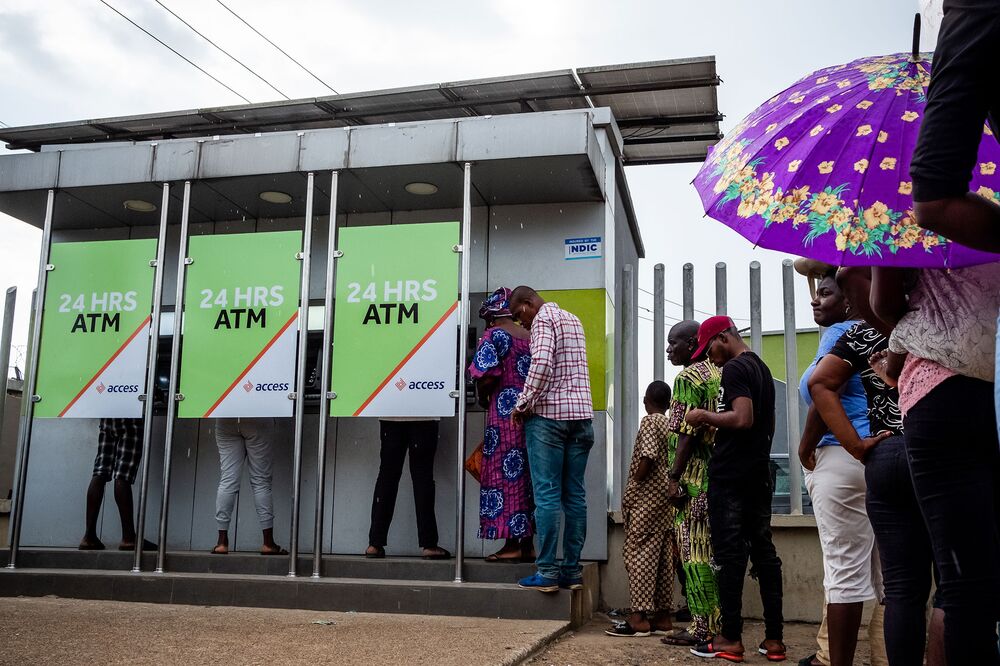
Fintech: Nigeria Lags Behind In Continent's Mobile Money Revolution

Every month, Ifeyinwa Abel, the secretary of a Pentecostal church in Lagos, spends as much as a quarter of her salary sending money to pay for diabetes drugs to her mother 430 miles away in Abia Ohafia, a small agricultural village.
It isn’t easy. First Abel, 35, has to go to a bank branch in Lagos, the country’s commercial hub, and transfer 6,000 naira into the account of a friend in Ebem Ohafia, another town in Abia state. Then she’s got to pay 2,000 naira to 4,000 naira for her 65-year-old mother, Uche Arua, to get on the back of a motorcycle and ride 8 miles from her village to Ebem Ohafia to pick up the money.


At least that’s what happens if this fragile arrangement doesn’t break down. Some months, Abel can’t afford the motorcycle fare; other times, rains make the dirt road impassable. “Sometimes I am unable to send the money, and she stays without the drug, and I am pained,” Abel says, shaken and dabbing her eyes with a handkerchief. “She must get the money and buy her drugs to survive.”
Abel’s story would be unusual across much of the rest of sub-Saharan Africa. In a region that accounts for half of the world’s 866 million mobile banking and payment accounts and two-thirds of all money transferred by phone, Nigeria is a laggard. There are an estimated 172 million mobile phones in the country, but it didn’t award a single mobile banking license until July, when it gave one to South Africa’s MTN Group Ltd. Its foot-dragging—encouraged by the traditional banking sector, say industry analysts and telecommunications companies—is blamed for declining financial inclusion in this country of almost 209 million people.
Nigeria vies with South Africa as the continent’s largest economy and is its most populous, but it’s a “sleeping giant” in the world of fintech, according to GSMA, a trade body that represents 750 mobile phone operators globally. Across sub-Saharan Africa, the adoption of mobile payments, which incur lower costs than traditional banking, has helped bring financial tools to the masses. Financial inclusion in the region grew by more than 8 percentage points from 2014 to 2017, to an average of 43 percent, according to World Bank data.
In Nigeria, the rate dropped almost 4 percentage points, to 39 percent—far short of the Central Bank of Nigeria (CBN) target of 80 percent by 2020.
Even with its new license, MTN doesn’t look much like a bank: It can’t lend money or pay interest. In Kenya, by contrast, Safaricom Ltd. acts much more like one. Part-owned by a unit of Vodafone Plc, it launched its M-pesa app in Kenya in 2007. Today 22 million people, almost half of the population, use M-pesa as a mobile bank—buying groceries, borrowing money, transferring cash. “There’s no excuse for not sending money home because it’s now very easy,” says Kip Ngetichi, a 28-year-old waiter in Nairobi, who, with a few keystrokes, sends money twice a month to his mother 240 miles away in the western town of Kitale.
“The way the legislation is written, even now, is very favorable to the banks”
Telecommunications companies and analysts say Nigeria is straggling behind its neighbors because its banks successfully campaigned to forestall the introduction of mobile payments. “The banks have been lobbying hard to protect their interests,” says Christophe Meunier, a senior partner at Delta Partners Group, an advisory firm for technology and media companies.
The new law, critics say, is hardly a cure-all; indeed, the way it’s structured will likely slow MTN and its rivals in line for licenses—Bharti Airtel, Globacom, and 9Mobile—in their attempts to roll out services. Without the ability to lend or pay interest, mobile operators may struggle to encourage people to keep money in their accounts, says Usoro Usoro, the general manager of mobile financial services for MTN Nigeria. “Mobile money in its delivery is intrinsically a collaboration of multiple industries,” he says. “We haven’t received as much collaboration as required.” As things stand, says Meunier, “the way the legislation is written, even now, is very favorable to the banks.”
With 61.5 million subscribers and a network that spans all of Nigeria’s 774 local government jurisdictions, MTN can offer a larger consumer base than any of the nation’s banks. It plans to accredit 500,000 agents just to pay money out to recipients of mobile transfers if they want hard cash. Still, Usoro says, adoption of the technology will be slower than it could have been if regulators had allowed MTN to provide a wider range of financial services, including savings accounts and loans. “For mobile money to make the impact that we’ve seen in other African countries, it needs to be utilized as far more than a simple money-transfer business,” he says.
For their part, Nigeria’s banks are adamant that they haven’t intentionally slowed the introduction of mobile money. They blame the country’s low literacy levels and poor financial infrastructure in rural areas. Nigeria’s literacy level is 51%, compared with 79% in Kenya, according to the World Bank. “Financial presence, as well as financial literacy, is not adequate in rural and remote areas,” says Iphy Onibuje, head of digital banking at Lagos-based Fidelity Bank Plc. Digital transfers only began to be piloted in 2012, she says. To win more business, she adds, the bank is willing to partner with mobile phone companies that have greater reach into rural areas.
As inadequate as the new legislation is from the standpoint of the mobile phone companies, their services are hugely in demand and are expected to take off fast as more licenses are granted. The country’s adult population of 111 million—which dwarfs the 64 million in Ethiopia, another major sub-Saharan country where mobile banking has made limited inroads—is a big draw for providers.
The presence of two large mobile phone companies that have track records and extensive operations in other countries—MTN and Bharti Airtel Ltd.—will probably accelerate the take-up of services in Nigeria, Meunier says. “MTN and Bharti Airtel will be pushing their platforms, and I think the other two will follow suit,” he says.
For Abel, who also often sends home a little extra to pay people to help her mother with plowing and weeding around her plot of land, that can’t come soon enough. “I have heard about mobile money,” she says wistfully. But for her, even now, the idea that you can move money through an app on your phone still seems a distant fantasy.

CBN’s Real Sector Credit Drive: Yea or Nay, Ask Analysts At United Capital

In July 2019, the Central Bank of Nigeria (CBN), intensified efforts to ramp up real sector credit by imposing a minimum Loan-to-Deposit ratio (LDR) of 60.0 percent on Deposit Money Banks (DMBs), with a Sept 30th deadline.
However, rather than simply penalizing the banks as hinted earlier, the minimum ratio was revised upward to 65.0 percent, with a new deadline of Dec 31st, 2019. Also, a new weight of 150 percent was attached to credit extended to the consumer lending, mortgage, and retail sectors.
At first glance, the new deadline was viewed as an extension, but contrary to this, DMBs that failed to meet the initial 60.0 percent deadline by September 31st were penalized. 
Accordingly, a total of 499.2 billion naira was debited from 12 banks found wanting, the majority being Tier-1 and International banks.
With the pace of policy directives targeted at the banks, there are growing concerns as to what this means for the financial system. 
First, is the risk of the banks aggressively crashing lending rates to meet up the new limit before the deadline and consequently impairing their asset quality. Secondly, at 65.0 percent, the CBN’s next action is unclear, considering that prudential maximum LDR is set at 80 percent, while regulatory cash reserve (CRR) and liquidity ratios are pegged at 22.5 percent and 30.0 percent respectively. Finally, the CBN’s effort to spur real sector credit remains commendable, however, the fragility of the macro-environment calls for caution.

Thursday, 26 September 2019

Economic Advisory Council: Nigeria’s Buhari Courts Market Advice He May Not Heed

A new Economic Advisory Council established by President Muhammadu Buhari could usher the reforms needed to breathe life into Nigeria’s economy during his second term.
That is if the 76-year-old former military ruler listens to them.
Buhari named an eight-member Economic Advisory Council last week to replace a broader team of bureaucrats led by Vice President Yemi Osinbajo, who under the constitution is the government’s economic policy coordinator.
Business leaders, including Aliko Dangote, the continent’s richest man, applauded the creation of the board to bolster investor confidence.
The council of independent and private individual experts in their own right, which will meet directly with Buhari every quarter, is led by Adedoyin Salami, a central bank board member until 2017 and lecturer at the Lagos Business School, known as a cradle of orthodox economists. 
Other members include former central bank chief Chukwuma Soludo and Bismarck Rewane, an ex-Barclays Plc banker.
“These are known free-market capitalists who have been critical of President Buhari’s economic policies,” said Cheta Nwanze, head of research for Lagos-based SBM Intelligence. “While I’m cautiously optimistic, it remains to be seen really where this will go.”
The first major task will be to convince Buhari to reopen the border with Benin, Nwanze said. Buhari partially closed the frontier in August to halt rampant rice smuggling that his government claims hampers local output, a step business leaders say has disrupted regional trade.
Next on the agenda will be deeper reforms needed to modernize the tax system, eliminate multiple exchange rates and overhaul the oil and power sectors, which the new panel members have urged this and past administrations to do for years.
Convincing Buhari to limit the state’s hand in the economy, could however be a tougher task, Nwanze said.
Government intervention to keep the naira artificially strong and curb imports to foster local production is partly blamed for the slow recovery from a 2016 contraction. With annual economic growth of barely 2.0 percent over the last two years, Nigeria trails smaller neighbors that have some of the world’s fastest-growing economies.
The government has defended its interventions in the economy as the only way to wean the country off oil, encourage local production and lift millions out of poverty. Last year, Nigeria surpassed India as the country in the world with highest number of people living under extreme poverty.
Mixed Signals
Buhari’s economic ideology was shaped during his years as a military ruler between 1983 and 1985, when the state intervened directly in some sectors of the economy. His policies have at times clashed with the more pro-market Osinbajo whose former law firm advised investors on capital market deals. Osinbajo has been in charge of initiatives to attract foreign investors and pushed for the country to sign the Africa Continental Free-Trade Agreement.
“There has clearly been mixed undertones, and we expect the new council to help provide clarity and a middle ground,” said Abiodun Keripe, financial and investment analyst at Troyka Holdings in Lagos. “If the president is able to listen to some of their advice I think we should see a shift.”

Thursday, 25 July 2019

The Good, the bad, the ugly of Buhari ministerial nominees

List of ministerial nominees was released by President Muhammadu Buhari, fifty-five days after he was sworn in for a second term in office. The release of the names of his cabinet members’ nominees this time, however, beat his first-term record of six months.

The nation was kept waiting for six months in 2015 before the president could assemble his cabinet and by the time the list was out, not fewer people were disappointed with the names of ministers.
In the past four years, the records of performance of the last group of ministers were nothing to cheer about, apart from a few of them, the majority of them were lackluster in their performance.
Expectations that the President would learn from the past and this time assemble more compact and high flying performers as members of his cabinet may have been dashed. From the look of thinks, the ministerial list released by the president of the Senate, Ahmed Lawan on Tuesday contained the same old tired faces of politicians, whose performance at their former beats were nothing to cheer about.
A closer examination of the list showed that there was no striking name that could fit well into the critical finance ministry, same for the budget and planning ministry.
Although Zainab Ahmed, who held fort at the finance ministry after the sudden exit of Kemi Adeosun, was listed as a ministerial nominee, many analysts said her performance in the office during the last dispensation was far from stealer.
The former finance minister merely wobbling and fumbling throughout her short stay in the minister and nothing significant can be ascribed to her as an achievement.
Unlike the former occupier of the office, Adeosun who introduced many reforms in the finance ministry before she was forced to resign due to her alleged forged NYSC certificate; Ahmed was unable to follow through with all the reforms initiated by her predecessor.
The tax amnesty programme, Voluntary Assets and Income Declaration Scheme (VAIDS), designed to expand the tax net and capture many high networth individuals who hitherto invade payment of tax died a natural death as a result of lack of diligent prosecution.
Another name on the list is the former minister of information, Lai Mohammed, who was generally tagged the propaganda machine of the government had attracted more opprobrium to the government than goodwill during his last tour of duty.
His inability to distinguish his former role of a political party spokesman and official government spokesman was a major flaw that marked his tenure in the information ministry.
Among the nominees was the immediate past governor of Osun State, Rauf Aregbesola, who is coming newly into the cabinet if his name is eventually clear by the Senate. Aregbesola as governor of Osun State was well known for owing worker’s salary and his uninspiring pursuance of an educational reform that add little value to the system but more confusion and division among various religion sects in the state.
Although, some people said he made some giant steps in terms of infrastructure renewal in the state, he left huge debt for his predecessor in office to tackle.
Also, the return of Chris Ngige, a former minister of Labour and Productivity is another miscue by the President, who many expected to inject fresh blood from both the private sector and apolitical section of the country to boost his performance in his second term in office..
Although the country enjoyed a relative industry peace during the last four years, but the shambolic approach that characterised the negotiation for the new minimum wage by the ex-Labour minister and his various unguarded comments remain an albatross on his neck.
The tenure of the former Attorney general and minister of Justice, Abubakar Mallami remain shrouded in major controversy from allegations of collusion with some people to shortchange the country and his handling of the altercation between his office and the anti-graft agency the Economic and Financial Crime Commission (EFCC) were some of the low points of his tenure.
The nomination of Gbemisola Saraki, junior sister to the immediate past President of the Senate, Bukola Saraki was seen as a political compensation for the younger Saraki for her support during the last election and probably to spite his brother who was seen as a thorn in the flesh of the President in the last dispensation.
Ms Saraki was a Senator between 2003-2007 before his brother took over from her and represent Kwara Central in the upper chamber. However, her tenure at the Senate has nothing significant to remember her for other than that she came to the Senate because of her family influence in Kwara politics.
A number of commentators have picked holes in the list submitted for screening by the Senate, mainly because it contains mostly names of many personalities that have failed their people in their former point of duty. The hope for a next-level that would usher in a good time for Nigeria may have gone up in smoke. If the last cabinet performed below average, the new one may not march up to the performance of the previous one.

Friday, 19 July 2019

Drilling Rig as a Vessel: Distinguishing the TRANSOCEAN Case Vis-a-Vis the SEADRILL Case

The Court of Appeal in the recent Judgment of Transocean Support Services Nigeria Limited & 3 Ors v Nigerian Maritime Administration and Safety Agency & 1 Or: Appeal No:CA/L/ 503/2016, held that drilling rigs cannot be deemed to be vessels for the purpose of the Coastal and Inland Shipping (Cabotage) Act, 2003 and liable to the 2% surcharge as stipulated in the Cabotage Act. In arriving at its decision, the Court of Appeal gave consideration to the provisions of the Cabotage Act and held that either both or one of two conditions had to be met in order for a drilling rig to be classified as a vessel under the Cabotage Act.
The first condition is that in order for a drilling rig to be deemed as a vessel eligible for registration under the Cabotage Act, it was crucial to show that the rig was designed, used or capable of being used solely or partly for marine navigation and used for the carriage on, through or underwater of persons or property without regard to method or lack of propulsion.
The second condition is that a drilling rig could be classified as a vessel under the Cabotage Act if it is shown that the rig was listed among the machinery expressly identified as vessels in the Act. It is crucial to note that the Court of Appeal expressly stated that either both or one of these two conditions are necessary to make a drilling rig a vessel under the Cabotage Act.
The Respondents in Transocean failed to show that the drilling rig in contention satisfied any of the two conditions identified by the Court of Appeal. As a result, the Court of Appeal held that a drilling rig could not be classified as a vessel under the Cabotage Act and further held that the listing of drilling rigs under the head of foreign vessels in the Guidelines on Implementation of Coastal and Inland Shipping (Cabotage) Act 2003, Revised 2007, was beyond the powers of the Minister of Transport.
At first blush, the Court of Appeal’s decision would appear to have overturned the judgment delivered in the recent Federal High Court case of Seadrill Mobile Units Nigeria Limited v The Honourable Minister for Transportation & 2 Ors, however, this is not so. In Seadrill, it was held that the drilling rig in contention was a vessel under the Cabotage Act because it satisfied one of the conditions identified by the Court of Appeal in Transocean, which is that the rig must be capable of being used for marine navigation and for the carriage of property and persons.

This is different from the position in Transocean where the Respondents failed to establish that a drilling rig satisfied any of the two conditions laid down by the Court of Appeal for the purpose of classifying the rig as a vessel under the Cabotage Act. This clearly reflects that the decision in Seadrill is distinguishable from the decision in Transocean.
From the above, the effect of the Court of Appeal’s decision in Transocean is that a drilling rig could be considered as a vessel under the Act, if it satisfied the condition that it is capable of being used for marine navigation and for the carriage of property and persons without regard to method or lack of propulsion, irrespective that the drilling rig is not expressly listed as a vessel under the Cabotage Act.
Given this position, there is the likelihood that there could be more cases seeking the determination of whether a particular drilling rig is a vessel under the Cabotage Act, which will be decided on a case by case basis. In light of this position, it would appear that the final word is yet to be heard regarding the controversial matter of whether a drilling rig is a vessel under the Cabotage Act.

Tuesday, 16 July 2019

How Potent Is Recent Change To the SDF threshold?

Last week, the Central Bank of Nigeria (CBN), once again tapped into its arsenal of circulars. In what seemed like a repeat of history, when banks remunerable placements at the Standing Deposit Facility was capped at N7.5bn some few months after the tenor of the CBN governor started in 2014, the CBN reduced the maximum placement at the window to N2.0bn.

This directive came a few days after the CBN issued a regulatory note for banks to increase their loan to deposit ratios to 60.0% by Sep-19.
No doubt, the CBN is doubling down on efforts to drive banks to increase lending to the private sector.
For context, data from the NBS showed banking sector credit to the private sector fell 2.5% y/y in 2018 and an annualized Q1-19 number shows that we could be on track for a further decline by the end of the year.
It is unlikely that the CBN’s recent policy will trigger a spike in credit to the real economy in the near term.
Rather, banks could opt to lose 50.0% of liquid assets to CRR at 0.0% instead of worsening asset quality.
In the medium term, banks will have no option but to lend by either going into a partnership with Fin-Techs, via liquidity support, to drive SMEs loans or boost their risk management framework to drive credit origination and expansion.
Overall, interest income could suffer in 2019 (especially in Q4-19) as lower yield, tighter regulation, and harsh operating environment soften bottom lines.
Meanwhile, with the MPC set to meet next week, we see the possibility of an adjustment to some policy of the variables to support recent actions.

Thursday, 11 July 2019

MARKET DEVELOPMENT: CBN Moves To Cut Cost Of Liquidity Management

The CBN FX Importation figure and NBS Capital Importation number
In the days of yore, it was generally believed that photograph does not lie, in fact in some geographic zone an idiom was coined for such saying; the camera is like a mirror and as you pose for it so your image will be reproduced.
However, with the advancement in technology, such talks have since changed and became irrelevant, no thanks to Photoshop applications and other filtering mechanisms that could easily transform people’s image from ugly to beauty or distort the look as the case may be.
So also is the axiom that says data don't lie because of the dependability of data these days will depend on the sources of such statistics.
The report of capital importation into the country released last week by the Nigerian Bureau of Statistics (NBS) significantly exposed the manner data could be used or manipulated to achieve expected ends or results
Going by the CBN figure, estimate foreign investment inflows into the country between April and May stood at around $5.72 billion. The regulatory bank figure is doubtful considering the trend of capital flow since the advent of President Mohammadu Buhari’s administration.
Anyway, the disparity in the figure of capital importation into the economy is better left to be resolved by the two agencies of government. It’s however important to note the political undertone behind the release of the CBN figure, which came more than two clear weeks before the release of the NBS figure, which must have also been obtained from the regulatory bank.
Government agencies should ensure the integrity of data released to the public otherwise, they will be inadvertently undermining their relevance in the economy.

NSE suspension of 11 companies and importance of effective regulation The Nigerian Stock Exchange (NSE) last week slammed 11 companies listed on its board for their failure to submit their financials within the stipulated time frame. The move was in consonance with the market regulation on submission of market information by listed firms.
The rule was to ensure transparency in the operations of such listed companies and provide investors with timely market information to enable them make informed decision on their investment.
The beauty of the regulatory action manifested few day later when one of the suspended firm rushed to the exchange to file its audited report, which was overdue, while another have to file information on the late submission of its financials.
However, beyond the issue of suspension of trading on the shares of the defaulting companies, the NSE should go a step further in collaboration with the capital market regulator the Securities and Exchange Commission (SEC) to enforce stricter sanction on key officers of such firms.
Restoring and sustaining investors’ confidence in the market will continue to require the effectiveness of regulations in the market and discouragement of impunity by some operators.
Experience in the past when many companies where not transparent with their accounts and misled many investors into buying into their stocks and later regret their action should not be allowed to repeat itself in the market.
Market regulators should tighten market rules to ensure that companies listed adequately comply with the dictates of the market.
The investors should be protected and their funds secured in the market so that the purpose of capital market is fulfilled and the economy is better for it.

CBN moves to cut cost of liquidity management, wean banks of cheap earnings In a bold move to discourage banks from dumping their excess cash at the Central Bank of Nigeria (CBN) Standing Deposit facility (SDF) window and slash the cost of liquidity management, the regulatory bank came out with a circular on Wednesday proclaiming its decision to stop paying interest on commercial lenders idle funds with it.
The measure will checkmate the habit of many high net worth banks that usually dump their idle funds at the CBN SDF window to earn up to 8.5 percent interest rather than lending to the productive sector or on the interbank market.
The regulatory bank over the years continues to spend a huge portion of its balance sheet to manage liquidity in the system and pay interest on banks idle funds deposited with it.
This has often indirectly encouraged banks to resort to armchair banking rather than focus more on their intermediation role in the economy.
Many of the banks rake in huge profits from merely placing their idle funds at the CBN SDF window to earn secured interest and invest the balance in treasury bills and other government debt instruments.
Most banks resort to this measure because of the high rate of default in their loan portfolio and the high risk associated with granting credit to the private sector.
Many analysts consider the latest move by the central bank as timely and would lead to the reverse of the trend where banks simply depend on fee earn from government treasuries and placement in the SDF to record jumbo profit.
The CBN should go ahead to slash the present interest being paid on funds placed by banks in the SDF window to the barest minimum as a way of discouraging them from just dumping their idle fund with the regulatory bank.
However, the monetary authority should strengthen its supervisory role in the financial system, tightens risk management process in the industry and help banks recover the bulk of their NPLs through appropriate monetary policy initiative.

Tuesday, 9 July 2019

Capital Importation Numbers And Need For Economic Restructuring

The National Bureau of Statistics last week released data on the total capital importation to the country in the first three months of the year. The report shows that the total capital flows to the economy stood at $8.48 billion in the first quarter of 2019. The figure also indicated that the first quarter figure was more than the last quarter of last year’s number by 216 percent.
Prior to the release of the NBS data on capital importation, the Central Bank of Nigeria (CBN) had earlier released figure of foreign investment inflows into the country for the first five months of the year on June 17.
The CBN said, “Total capital flows to Nigeria, from January to May 2019 stood at $14.2bn of which Foreign Direct Investment accounted for $2.87 billion, representing 20.18 percent of the total amount.
“The country continues to enjoy steady capital flows due to the prevailing stable macro-economic environment and sustained investors’ confidence in the economy,” the regulatory bank had said in the statement on June 17.
The apex bank claimed that the FDI component of the total accounted for $2.87bn in the period between January and May this year while the NBS data showed that the FDI accounted for 2.86 percent or $243.36 million of the total figure in the first three months of the year.
Ordinarily, the capital importation data released by the two government agencies ought to be cheering considering the anxiety and uncertainty created by the last general election both within and outside the country.
The days, weeks and months preceding the general election in March were akin to a nation preparing for war and as if the country would not survive after the conduct of the elections.
Politicians from both sides of the divide were heating up the polity apparently to gain support and paint the other political actors and opponents dark in the face of the electors.
Many foreign investors were expected to stay away from the country due to the intensity of the campaigns by politicians to gain the attention of both the electors and foreign governments.
Even though the results of the elections are being disputed at the tribunals by the losing side, it was instructive that the elections turned out not to be as volatile as predicted by many analysts.
The economic data released so far by the agencies of government has since shown that the impact of the tension that preceded the elections did not reflect on the economy.
First, throughout the period preceding and after the elections, the local currency did not experience either fluctuation or depreciation as the naira remained stable at all the segments of the foreign exchange markets contrary to expectations prior to the elections.
The naira traded around N360 to the dollar through the period on the parallel market and 307 per dollar on the official window.
Equally, the inflation rate at the end of the first quarter did not experience any significant change. Inflation rate stood at 11.25 percent at the end of the first quarter of the year and has slightly moved up to 11.40 percent at the end of May.
Analysing the capital importation figure as released by the NBS showed that the bulk of flows into the country came from portfolio investment or what could be regarded as hot money in the financial parlance. The Offshore Portfolio Investors imported capital stood around 56.5 percent of the total capital flow, which is $7.1 billion of the $8.48 billion total capital imported to the country in the period.
The FDIs remained abysmally low at $243 million in the period under review. Significant concern on the figure released by the statistics office is that the bulk of the inflows was invested in the fixed income segment of the money market.
The offshore investors were simply attracted by the relatively high yields on government borrowing instrument comparable to other emerging market and developed economies.
Essentially, the economy was truly not significantly benefited from the foreign investment flows into the country basically because of the concentration of the investment in money market instruments which has no direct bearing with the productive sectors of the economy.
The report also negates the claims by government officials that the increased flow of foreign investment into the country was as a result of improved investors’ confidence in the economy.
Besides, the increase importation of offshore portfolio investments into the country has a short-term benefit on the country because it helps the central bank to stabilise its currency management policy. The relative stability the naira enjoyed in the last two years or so could be partly attributed to the increased flows of portfolio investment into the country.
However, in the event of a financial crisis, the first investors to take flight from the country are usually the portfolio holders due to the ease of investment exit.
Simply put, the increased capital importation flow speaks to the high-interest rate regime in Nigeria which has more or less stifled private investment in the productive sectors and encouraged the investment of both local and foreign cash in government treasuries and debt instruments.
Confirming this trend, the CBN Monetary Policy Committee (MPC) at its last meeting in May had decried the abysmal lending habit of banks in the country.
Nigerian banks are usually regarded as some of the most reluctant lenders in major economies within its peers, with an average loan-to-deposit ratio below 60 percent.
In their personal note at the last MPC, members of the rate-setting committee noted the sustained drop in banking loans to the productive sector.
The MPC members raised concerns over the vulnerabilities in the banking industry which include high concentration and contagion risks as well as significant foreign exchange exposure.
They said many of the banks are risk-averse and would rather invest the bulk of their assets in government treasuries and fixed income because of the safety of investment and the relatively high returns on such investment.
The CBN staff report on the banking industry showed that 70 percent of the bank’s liquid assets are invested in Treasury bills and other government debt instruments. The same reason portfolio investors keep coming into the country to benefit from the attractive returns on investment in government debt.
“It is especially concerning that credit to the private sector is declining and this needs to be halted and possibly reversed to strengthen economic activity and job creation,” Edward Adamu a member of the MPC said.
The recent move by the CBN to encourage banks to lend 60 percent of their Liquid-to-deposit-ratio to the productive sectors of the economy may not have put into consideration the risk factor in the environment that keep discouraging lenders from granting loans to the private sector. Latest data on Non-Performing Loans (NPLs) in the banking industry shows that it declines to 10.95 percent in April, nevertheless, this remains higher than the five percent prudential limit.
As long as the high-interest rate regime persists, not many banks would be willing to stake their assets on lending in an environment where the rate of default is high. They would rather put the bulk of their liquid assets in government treasuries where the risk of default is near zero.
Also unhelpful is the delay by the President to appoint a cabinet that would help him drive his so-called Next Level agenda. Nigeria needs to do more in attracting foreign investment into the country; especially the FDIs and we don’t have the luxury of time on our hands.
Presently, no matter what happens to our politics and economy, many portfolio investors will continue to flock into the country as long as the yield curve on government debt instrument stays in the north while interest rates in the developed economies remain in the south.
To set the right environment for a fast-pace development of the economy, the government must move from its current lethargic approach to governance to a more purposeful and vision-driven approach.
President Muhammadu Buhari should as a matter of urgency constitute his cabinet immediately and populate it with dynamic young professionals and not weather-beaten politicians who are not able to rise above partisan politics in their formulation and execution of government policies.
A major economic restructuring should take place, to reduce the cost of governance, cut waste where necessary and ensure that tough decisions to help lift the economy are taken into consideration when policies are being formulated.
The CBN should do away with many of its off-balance sheet interventions in the economy and concentrate more on its price stability role, effective banking regulation and perfect its monetary policy measures to address many of the structural weaknesses in the financial system.

Monday, 8 July 2019

CBN New Directive On Lending, How Realistic?

The Central Bank of Nigeria (CBN) released a circular last week which directed banks to lend 60 percent of their Liquidity-Deposit-Ratio (LDR) to certain sector of the economy. The directive came with a proviso that banks that failed to obey the directive could have their cash Reserves Requirement (CRR) jerk up.
What this simply means is that banks that are reluctant to extend loans to the specific sectors of the economy should be prepared to have the portion of their liquidity taken away from them and kept in the regulatory bank’s vault without earning any interest on such.
The motive behind this directive is sure noble and should be applauded by many Nigerians who are seriously concerned about the fragile nature of the country’s economy and want something done about it..
From one Monetary Policy Committee (MPC) meeting to the other, members of the rate-setting committee have expressed concerns over the failure of many banks to extend loans to the productive sectors of the economy. The shrinking intermediation role by banks is already having serious negative impact on the economy.
According to CBN financial sector stability report, banks are investing about 70 percent of their liquid assets in government treasuries and other debt instrument, which are considered safe and attract high returns.
The regulatory bank has also pointed out that loans to private sector have continued to decline since 2017 and something should be done to curb the trend.
In fact, some people are accusing many banks of fleecing their customers through various means so as to stay afloat, since earning from their traditional role has continued to shrink.
However, the truth could be located somewhere in the centre of the weak economic environment they are operating in.
Banks aversion to granting credit was a fall out of cumulative experiences of the past when many people deliberately borrowed from the industry and failed to pay back. Latest data on Non-Performing Loans (NPLs) in the banking industry shows that it declines to 10.95 percent in April, nevertheless, this remain higher than the 5 percent prudential limit.
As much as the CBN latest directive was desirable, the truth remains that under the present conditions, banks will continue to find it difficult to lend to the private sector unless both the fiscal and monetary authorities take decisive steps to correct the imbalance in the system.
The government should reform the judicial system and ensure that those who resort to the court to prevent banks from recovery their outstanding loans are not granted undue advantage through legal technicalities.
The regulatory bank should strengthen the credit bureau to ensure that people who are recalcitrant debtors are screened out, blacklisted and deny access to bank facility as deterrent to other would-be-debtors.
Banks should also be helped to strengthen their risk management department to ensure that frivolous credits are not extended to those who do not deserve it.
Without adequate measures to discourage recalcitrant debtors from walking away freely despite failure to fulfill their obligations; the CBN attempts to boost the economy through increased credit to private sector will ended up a pipe dream.

President Buhari’s reappointment of his kitchen cabinet, signs of things to

President Mohammadu Buhari last week announced the reappointments of some of his key officials who have remained in office even after his first tenure in office expired on May 29.
Those reappointed include his chief of staff, Abba Kyari, the secretary to the federal government, Boss Mustaphar, and other personnel considered to be members of his kitchen cabinet.
The reappointment was contrary to speculations that the president could rejig his inner cabinet to create the atmosphere for effective governance, but that was not to be with the confirmation of their appointment last week.
Analysts believed that the reappointment was a confirmation of concerns being expressed by many that the government pace of work may likely not be different from what it used to be.
It was noted that though the reappointment is consistent with the president behavioural pattern of retaining those trusted and familiar with even if they remain inefficient.
The reappointment is also seen as a signpost of what should be expected whenever the president eventually constitutes his cabinet.
Many observers believed that Nigerian should not expect any drastic change in approach to governance in the next four years as the president is not likely to make any meaningful restructuring in his policy and actions.
President Buhari had in May surprised many people with the reappointment of the Governor of Central Bank of Nigeria (CBN), Godwin Emefiele for a second term of five years in office.
The reappointment came at a time Nigerians are expecting a holistic change in governance and the people driving its policy.
Before the reappointment of Emefiele for a second term, all other previous CBN governors from 1999 till date failed to get reappointment as they were changed by the successive administration in their bid to strengthen the monetary authority.

Thursday, 27 June 2019

Proposed Banking Sector Recapitalization: How prepared are the listed banks?

Recently, the governor of the Central Bank of Nigeria (CBN), Godwin Emefiele, unveiled his plan for the second term in the office. 
Among others, the CBN’s plan to recapitalize the banks was the major highlight of the speech and this brought back the memory of the 2004 banking sector recapitalization wherein the banking sector minimum capital base was revised up from N2.0bn to N25.0bn. 
Notably, the most rational basis for newly planned recapitalization can be linked to the drop in the value of the naira against the dollar (N100/$ in 2004 vs. N360/$ currently) which had weakened the current minimum capital base of banks in dollar terms from c. $250.0mn in 2004 to c. $69.4mn today.
In our analysis, for the CBN to restore the capital base to c.$250.0mn, the dollar equivalent in 2004, the monetary authority will need to revise upward the current capital base from N25.0bn to at least N90.0bn ($250mn at N360/$).
Certainly, most of the listed banks are in a good position to withstand a recapitalization exercise, if the exercise is merely to reflect the current exchange rate environment. 
However, UNITYBNK and WEMABANK will need to shore-up their shareholder's fund which is below N90.0bn. 
STERLNBA is just some level above the estimated N90.0bn. Also, unlisted players such as KEYSTONE, POLARIS and HERITAGE may be affected. 
Overall, we believe the newer or recently licensed banks will feel the heat the most.
(C) United Capital Plc

Wednesday, 26 June 2019

NIGERIAN MARKET DEVELOPMENT: Of SEC New Board, CBN Banking Sector Reform

New SEC board inaugurated and works ahead
Four years after the last board of the capital market regulator led by Peter Obi was dissolved by President Mohammadu Buhari, a new board was constituted for the Securities and Exchange Commission (SEC) this week.

The new board is headed by a commercial lawyer, Olufemi Lijadu and also comprise of the representatives of the Central Bank of Nigeria (CBN) and the finance ministry in accordance with the SEC enabling Act.
The inauguration of the new board came at a time when the regulator has been trying so hard to assert its position in the market and stamp its authority on the issue of governance in the capital market.
The board may have also inadvertently inherited a huge task of either scouting for a substantive Director General for the regulator or better still implementing the decision of the Federal Court, which ordered the restoration of the suspended DG.
Presently, the most senior commissioner in the commission is heading the regulator’s operations in an acting capacity. Mary Uduk, the acting director general of the commission has been proving her mettle since she ascended the position in the wake of the suspension of Munsur Gwazor by the then finance minister Kemi Adeosun.
The released of the report of the investigations into the operations of the energy firm Oando Plc by the Commission was received by the market as a pleasant surprise considering the political influence wielded by the chief executive of the oil company, Wale Tinubu.
The issues relating to the result of the investigations of SEC into the operations of the oil company and the subsequent sanction imposed on the Oando key principal officers may have to be essentially resolved by the judiciary.
However, the new board have critical role to play in the final resolution of the face-off between the commission and the oil company so as to help salvage the interest of investors in the embattled firm.
The manner the board chooses to resolve the issue will go a long way to either restore confidence in the market or undermine the integrity of the regulator.

CBN 5-Year road map for banking reform
The financial sector regulator, Central Bank of Nigeria (CBN) on Monday unveiled its five-year road map for the bank and the economy. In the presentation made by the governor of the CBN, Godwin Emefiele, he disclosed that he has a vision to position Nigerian banks in the league of 500 top banks in the world. To this end, he will be proposing a recapitalization programme for the industry to enhance their liquid assets and reduce the impact of any economic crisis on the financial system.
The recapitalization programme is one of the major policy thrust that have generated some discuss within the financial sector and investing public.
Many Nigerians may not be so enthusiastic about the new move in view of the state of the economy and the unpalatable experience of the past.
The last banking reform under Charles Soludo was significantly received by the investing public with huge expectations as many people even borrowed money to invest in the stocks of many of the banks.
However, 14 years down the line, many of those who embraced the share sales embarked upon by the banks in the course of the recapitalization exercise back then got their fingers burnt as a result of the subsequent development in the economy with grievous impact on the capital market.
The planned recapitalisation exercise this time around could face some resistance from the investing public who may require more than a mere campaign to get them to part with their money.
Besides, the imperatives of the expected new capital for banks are glaring in the face of massive devaluation/depreciation of the local currency since the last recapitalisation exercise.
At the time, when Soludo announced his banking reform and recapitalisation programme in 2004, the exchange rate of naira was at an average of 150 to the dollar. However, by the present exchange rate, the naira has depreciated to around 360 naira to the dollar on average at both the parallel market and Investors and exporters window.
The depreciation in the value of the naira has equally eroded the value of the capital base of the banking industry over the years.
Aside from the problem of Non-Performing Loans (NPLs), which has hindered many banks from extending credit to some key sectors of the economy, the issue of inadequate capital has continued to limit the ability of some banks to lend to big ticket businesses.
The exercise whenever it kicks off by the regulatory bank will definitely bring back to live the primary segment of the stock market.
However, the notice giving by the CBN for the recapitalisation of the banking industry is sufficient for the capital market regulators to fine-tune their processes to enable investors take advantage of the possible avalanche of new issues in the market when the time comes.
Investors may also have to look out for those banks that have been consistent in providing value for their investment and compensate them with subscription into their shares whenever they come to the market to raise funds.
The success of the planned recapitalisation would definitely depend on the discipline and commitment demonstrated by both the regulators and the financial institutions willing to raise funds in the market.

Tuesday, 18 June 2019

What President Buhari Should Do To Lift 100 Mln Nigerians Out Of Poverty ~United Capital

Recently, President Buhari revealed his 10-year target of lifting at least 100 million Nigerians out of poverty.
Notably, a Brookings Institution report in 2018 hinted that Nigeria has outpaced India as the poverty capital of the world, putting the number at c.87 million compared with India’s 73 million.
Unarguably, the alleviation of such an alarming level of poverty in the country should be a major concern to any committed leader with the best interest of his/her people at heart.
However, the major question that comes to the mind is, how? If the experience from China or India is anything to go by, then this is not an impossible task.
If the Nigerian government is committed, then deliberate effort must be put in motion in major sectors with the capacity to generate millions of jobs, as observed in the telecom and financial industry in the mid-2000s.
This effort must resolve the issue of epileptic power supply to allow businesses to cut down the unnecessary cost of energy, boost productivity and employment.
Again, the badly needed reforms in the oil & gas sector must be implemented to boost FDI that can exploit not just the oil-wealth, but the massive gas reserve.
Finally, Nigeria must mechanize agriculture and invest heavily in road, rail and storage infrastructure as well as fix the congestion at the ports.

Thursday, 13 June 2019

Can President Buhari, Others Give Nigerians Good Governance?

On Wednesday, May 29, President Mohammadu Buhari and 29 new state governors took the oath of office for the next four years in office.
While President Buhari was taking the oath for a second term in office, some of the 29 governors who took the oath were doing so for the first term, because they were taking over from those who had finished either their second terms in office or those not re-elected at the last elections.
Three governors fell into the categories of those who failed to get re-election for a second term in office, and they are Akinwunmi Ambode of Lagos; Mohammed Abubakar of Bauchi State and Bidow Jibrilla of Adamawa State.
While Ambode was outright denied a second term by his party, the All Progressives Congress, the other two were rejected by the electors at the poll.
There are also about seven governors who have yet to complete their terms in office because their elections are conducted outside the regular ones.
For instance, the governors of Edo, Osun, Ekiti, Bayelsa, Kogi, Anambra and Ondo states are still on their first terms in office, except for the Bayelsa governor whose second tenure will expire early next year.
The import of the transition in government is that the Nigerian constitution provides for four years tenure for the president and governors, renewable for another term of four years at the end of which power must transit to another person.
The tenure arrangement ensures that no individual remains perpetually in office either as president or governor under the democracy dispensation.
The principle of democracy also ensures that the people have the power to either re-elect or reject a government that failed to meet the aspiration of the electors at every four years.
The examples in Bauchi and Adamawa, and to some extent Lagos State were indications of what the people’s power can achieve in a democracy.
However, the change in baton at the state level is also a lesson that power is transient and irrespective of who holds it, there is always an expiry date for each office holder.
Even though Nigeria has not been blessed with good leaders at both national and state levels, we have seen some semblance of activities and performances in some states by governors and a little bit of that at the federal level at some point in our history.
Love or hate him, the administration of President Olusegun Obasanjo and that of Umaru Yar’Adua to some extent provided the country some breath of development. However, the two leaders, one is late now and the other still alive, failed to measure up to the expectations of the people and also fell short of maximising the opportunities they were provided with as leaders to impact positively the fortunes of the common man.
The period between 2009 and 2015 was largely regarded as a period of squandermania when the country generated huge resources from oil imports and yet had little to show for it. The administration of President Goodluck Jonathan could largely be remembered for the decision to transit power to President Buhari, a candidate of the then opposition party that wrested power from him, on a peaceful note.
He also failed to achieve much in terms of good governance and provision of basic infrastructure to accelerate development in the country.
The present administration seems to be tagging along the same path of non-performance and the dilapidation of basic values that used to guide our developmental plans. So, the government of Buhari has not inspired good feelings among the populace because of the widespread hunger in the land and lack of a properly conceived vision for a better tomorrow for the country.
Although the government was elected on the promises of anti-corruption, improved security and economic prosperity, none of the three areas has seen improvement, rather the economy is daily degenerating while the issue of insecurity has become widespread in the last four years.
The anti-corruption fight has been largely done on the pages of news media with little changes in the manner the country’s resources are being plundered by those in power.
In some states, the governors continue to see themselves as emperors and are out of control because those who were elected to provide checks and balances have turned themselves to the appendages of the state apparatus.
Government developmental focus has largely been on physical infrastructure rather than enduring policies on education, housing and agriculture which have a long term impact on the overall well-being of the people.
In Lagos, we have seen improvement in physical infrastructure, but that is where the story ends; the government has remained the most unaccountable to the people. It is easier for the camel to pass through the eyes of the needle than to extract information on the cost of projects executed from the state government and its agencies.
Beyond the issue of accountability in Lagos, nay other states as well, there are no deliberate plans for the development of education, health and provision of housing for the millions of people within the state.
The standard of education keeps falling in most public schools, creating rooms for the exploitative tendencies of the private sector operators who have turned the educational system to a money-making industry.
The health sector did not fare better as most government hospitals are not better than consulting edifices where the doctors prefer to refer patients to their private medical outfits where exorbitant fees are charged to procure health services.
Housing deficit keeps expanding yearly as a result of the failure of government at all levels to either provide direction for housing development or encourage individuals to own houses at affordable rates through an established mortgage system like it is done elsewhere.
The Land Use Act, which confers ownership on state governments, continues to hinder access to land ownership across the country apart from the issue of ‘omoonile’ syndrome which has also become epidemic and a nightmare for intending landowners.
In Ogun State, where Ibikunle Amosun was in the saddle of power for eight years, the rural dwellers and those on the fringes between Lagos and the state were neglected from his developmental projects throughout his tenure. While his government largely concentrated infrastructural development in the capital city and some adjunct towns, his focus of development was dominated by his vain focus on self-aggrandisement.
Most of the roads and bridges built in Ogun State in the last four years were done without consideration to their economic cost and benefit to the people.
Often, the methodology of the governments across the country is to offer some people patronage in lieu of development and corner the remaining resources for their own personal use.
For the country to move forward, there must be a paradigm shift in our approach to governance, where the people are made the central of development. The present system where power is concentrated on a few hands, who regard themselves as tin gods should give way to all inclusive governance where the inputs of the key representatives of the people are put into consideration in the formulation of policies for developmental purposes.
It is time to reduce the cost of governance so as to free more resources for developmental purposes and enhance the quality of life in the country. Government should concentrate development in areas that would yield more dividends for the people both now and in the future rather than embark on grandiose projects that only appeal to massage the egos of the persons in position of authority.
In the case of Ogun for instance, building overhead bridges in the capital city could only appeal to the ego of those in government and not in any way connected to the aspirations and expectations of the governed. The projected number of vehicular movement in the capital either now or in future is not commensurate with the investment in building bridges in the state capital and many other places in the state.
The government should also revisit the issue of humongous allocations for security votes, which are largely unaccounted for by the state chief executives. This practice was inherited from the military government who then devised the means to reward the top echelons of the military for being posted to juicy political offices which has continued to be abused by elected leaders under this democratic dispensation.
There should be a comprehensive review of our developmental plans to accommodate clear vision for a better future for the country in terms of the deployment of resources and manpower.
The whole world is gradually leaving us behind in terms of technological growth and deployment; Nigeria’s human resources are daily being poached by developed countries of the world, leaving our country on a large deficit of quality skilled manpower.
The best of Nigerians are being encouraged to migrate to Canada, Australia and even the United States for economic reasons while the mediocrities among us continue to dominate the political and perhaps, economic spaces.
It is also time for the people to rise up and demand quality representation in government and ask for accountability from those who they elect to govern the country. Without the input of the civil society and the populace at large, the country may continue to remain stagnant on same spot and the future may be in peril.

Analysts Want CBN To Target Inflation Rate As A Policy Anchor

Over the last 5-years, the Central Bank of Nigeria (CBN) maintained exchange rate stability as its policy anchor.

So far, this has been done at the expense of huge foreign exchange reserves, a relatively higher interest rate environment, and massive liquidity mop-up. While this has supported the stability of the local unit, the approach has kept inflation rate high, thereby failing to bolster high Gross Domestic Product (GDP) growth.
As Governor Godwin Emefiele heads into his 2nd term, we highlight the need for the Apex Bank to consider ‘inflation targeting’, a monetary policy regime which pursues a low, stable and predictable explicit inflation rate, as its policy anchor.
In contrast to ‘exchange rate stability’, inflation targeting has proven to reduce relative price variability, guide market expectation and promote long term growth.
While the model is popular in more advanced economies such as New Zealand, Canada, and the UK, experiences in developing countries such as Paraguay, Chile and most recently, Jamaica, tells that this strategy is increasingly a more effective policy anchor.
However, for monetary policy to deliver a low, stable and predictable inflation rate environment, Governor Emefiele must work with the fiscal authorities to reduce fiscal dominance by cutting down public debt to avoid crowding out the private sector.
The private sector must be empowered to diversify and boost their export earnings, as such, improve current account position.
Finally, the CBN must embrace a flexible FX regime to enhance its ability to respond to shocks.

Friday, 7 June 2019

Anaslysts At United Capital says MTN Nigeria Stocks Underprice

Last week, MTN Nigeria PLC (MTNN) published its financial year report for 2018, indicating that revenue grew by 17.1 perceent year-on-year to 1.0 trillion naira while Profit after tax surged 79.7 percent year-on-year to 145.7 billion naira.
This spurred buying interest on the stock in the last two trading days. Also, the Telco paid 50.0 billion naira and 111.6 billion naira as dividends in 2017 and 2018 respectively, translating to a Dividend per Share (DPS) of 2.5 naira and 5.5 naira at a payout ratio of c.70 percent over the period.
In Q1-2019, MTNN reported revenue growth of 13.2 percent year-on-year to 282.1 billion naira.
If annualized, this translates to 1.13 trillion naira by end of 2019 financial year. As such, EPS and BVPS numbers both seem likely to settle at c.9.5 naira/share.
At a dividend payout of 80 percent (compared to 70 percent average in 2017 and 2018), we estimate DPS at c. 7.6 naira which implies a dividend yield of 5.7 percent.
Again, ROE was 87.7 percent in 2018, which is consistent with expected ROE of +90 percent for 2019.
In terms of valuation, we look at the Enterprise Value to EBITDA (EV/EBITDA) multiple for MTNN, this came to 6.3x, below 6.9x average for peers across the Middle East and African Markets. The implied fair price using EV/EBITDA model came to 145 naira.
However, by Price to Earnings multiples (P/E), MTNN has a PE of 13.9x compared to 20.4x for peers, implying a fair price of 194.5 naira/share.
Overall, our blended valuation model sees MTNN at 171.7 naira/share, indicating that MTNN is underpriced at current price with a 25.7 percent upside potential.
The shares of MTN Nigeria closed at 136.95 naira on Thursday, having gained 0.26 percent at the close of business and 52.2 percent year-to-date (three weeks of transactions on the local bourse.)

Monday, 6 May 2019

NIGERIA’S MARKET DEVELOPMENT: CBN Liquidity Management And Other Stories

…CBN liquidity management
The debt management office (DMO sold a total of … billion naira in treasury bills this week at mixed yield in response to market sentiments.
The mode of investors’ response to the market this week also reflects the reading of the debt market and the economy at large by players in the market.
Offshore investors and pension fund went for the longer tenor 1-year paper, indicating some sort of confidence in the economy and desire of investors to lock up their funds in fixed income for a longer period.
This could also be a signal that the regulatory bank may further slash its key interest rate at the next Monetary Policy Committee meeting holding on May 17.
From all indications, the apex bank seems more interested in allowing more liquidity in the market. In the month of April, the Central Bank of Nigeria (CBN) sparingly conducts the Open Market Operation (OMO) in mopping up perceived excess liquidity from the banking system.
Relatively, interbank interest rate has remained below the benchmark interest rate of 13.50 percent for the better part of the last month and flowing into the new month of May.
Against the backdrop of the last reduction in the benchmark interest rate to 13.5 percent from 14 percent, the CBN may be signaling its intention to encourage commercial lenders to lend more to the productive sector of the economy.
The naira has been relatively stable at all the segment of the forex market in spite of anxiety by some players that a reduction in interest rate by the CBN could trigger depreciation of the local currency.
With more liquidity in the market and less room in the fixed income market for banks to dump their excess cash, it is possible that the commercial lenders may be compelled to be more flexible in lending to the productive sector of the economy.
This may also result in increase in employment and productivity and consequently on the Gross Domestic Product (GDP) figure at the end of the second quarter.

...MTN proposed listing on the NSE and Sanusi’s Appointment
The local unit of the South Africa’s telecoms giant MTN Nigeria this week appointed the former CBN governor and the current Emir of Kano, Lamido Sanusi into its board of directors. His appointment as a non-executive director will take effects as from July 1, 2019.
The news was received by the market with clear optimism that the appointment was done in clear expectation of the long overdue proposed listing of the company on the Nigerian Stock Exchange (NSE).
Sanusi, an outspoken banker and economist was governor of the CBN for four and half year as his five year tenure was truncated by the then President Goodluck Jonathan over his controversial claims that $20 billion belonging to the federation account was missing from the Nigerian National Petroleum Corporation (NNPC) accounts.
Though a forensic audit of the account of the NNPC was conducted, the report has not seen the light of the day till date. However, the government of the day regarded the claims by Sanusi as an affront and an attempt to bring down the government. He was replaced at the apex bank by Godwin Emefiele, who will be finishing his tour of duty in June.
However, many market players believed that Sanusi will bring his expertise to bear on the proposed listing and subsequent Initial Public Offering (IPO) of the telecoms giant in the future.
Sanusi appointment must have been influenced by the old tradition where foreign companies appoint influential northerner into their board to gain some advantage of such appointee connection with the government.
His appointment may be intended to ease thing for the company which has in recent time ran into storm with government on issue of tax, violation of regulatory rule on sim registration and some unethical labour practice.

...MPC meeting expected to further lower rate or hold
The Monetary Policy Committee (MPC) of the Central Bank of Nigeria (CBN) is expected to meet between May 20 and 21, 2019 to review the economy and chart a way forward.
At its last meeting, the rate-setting committee reduced the Monetary Policy Rate (MPR) usually refers to as benchmark interest rate to 13.5 percent from 14 percent which it has retained for over one year.
The move, which caught the market unexpected, was seen as the regulatory bank’s response to calls by the organized private sector for a reduction in lending rate by commercial banks to boost productivity in the economy.
However, market players believed the rate slash was not done in isolation of the development in the economy. For instance, inflation rate has fallen to 11.25 percent from 18.5 percent three years ago.
Besides, the local currency is stabled against the dollar for more than a year, providing the needed confidence for the regulatory bank to tinker with the benchmark interest rate.
Though market is yet to feel the impact of the rate cut on lending to the productive sector, however expectations are that the pass on effect could take some time to be noticed on the cost of fund and productivity in the economy.
A further reduction in the benchmark rate around the current inflation rate could further leave commercial lenders with more cash to play around with and providing them the opportunity to explore lending to some sector of the economy.
Some analysts are not comfortable with a further slash in interest rate at the next MPC meet; rather they prefer that the apex bank should sustain the present rate and watch its impact on the economy in view of the approval of the new minimum wage by the government.
Increase in wage could trigger increase spending by workers and consequently impact negatively on the inflation rate.
Like what happened at the last MPC meeting, a major surprise could be awaiting the market as the governor of the CBN, Emefiele holds his last MPC meeting. To change the present rate would largely depend on the reading of the economic trend by the 11 wise men in the MPC.

…Godwin Emefiele to bow out of CBN in June 
The governor of the central bank (CBN) Godwin Emefiele will bow out of office in June, which can be confirmed by this reporter. His five-year tenure will run its full course by June 3, 2019, being the anniversary of his appointment five years ago. He is expected to step down from office as President Mohammadu Buhari seems unwilling to grant him another term in office.
From available record, no CBN government appointed after Paul Ogwuma has enjoyed two consecutive term in office. Joseph Sanusi and Charlse Soludo appointed by President Olusegun Obasanjo spent one term in office, same for Lamido Sanusi appointed by Umaru Yar’adua.
Emefiele, a former chief executive of Zenith Bank was appointed as governor of the regulatory bank in June 2014 to replace Lamido Sanusi, current Emir of Kano who was suspended from office by the then President Goodluck Jonathan because of his audacious challenge of the integrity of the government.
He would be remembered for his tenacity in sustaining multiple exchange rates against all odds and criticism by the international financial institutions and local analysts who predicted woes for the local currency unless he reverses his policy.
The naira at some point depreciated to around 550 naira to the dollar on the parallel market, spurring some economist to predict that the naira could hit one thousand naira to a dollar at the rate it was going them.
Thanks to the introduction of the Investors’ and Exporters’ foreign exchange window in April 2017 by Emefiele, which boost the inflows of dollar from offshore investors interested in local debt and equity markets, the local naira shortly after the establishment of I&E window reversed its loses. Aside the introduction of I&E forex window, the recovery in oil price also help to sustain a positive outlook for the naira.
Largely, Emefiele management of the economy from the monetary policy perspective have been positive with inflation rate down from around 18.5 percent high to 11.23 percent during his tenure and a relatively stable banking industry, some people are willing to give him a pass mark on his performance.
However, there are many economists and bankers who regarded his tenure as a period of locust in the apex bank life.
A senior banker once accused him of coming to destabilize and bastardise the foreign exchange market with his foreign exchange policy that encourages multiple exchange rates. He was also accused of not doing enough to strengthen the banking industry and instill sanity in the system.
Who takes over from him remains a matter of conjecture by market players as characteristic of President Buhari, he may take his time to select a replacement while the most senior deputy governor hold forth at the regulatory bank in the interim.
A number of names have been flashed as potentials for the office of the CBN governor by some analysts but these might just be speculative until the president makes his choice known. There are strong indications that the president may appoint someone from the North to take over the reign at the regulatory bank.

Friday, 1 March 2019

PMB, THE PRINCIPALITIES AND POWERS

By FEMI ADESINA

Twice on Wednesday, President Muhammadu Buhari displayed an uncommon generosity of spirit. We had set forth at dawn, shortly before 5 a.m, to visit the presidential campaign office in Central Area of Abuja. The purpose was for the President to read his victory speech, having been pronounced winner of the February 23 election by Professor Mahmood Yakubu, Chairman of the Independent National Electoral Commission (INEC).
This portion resonated loudly in the speech, and was widely applauded by the All Progressives Congress (APC) stalwarts in attendance: "I will like to make a special appeal to my supporters not to gloat or humiliate the opposition. Victory is enough reward for your efforts."
Holy Moses!
Was the President telling his supporters not to stick out their tongues in derision, to mock those who had fought a bitter, if not acrimonious electoral war? Is all not fair in love and war again? Surely, the millions of Buhari supporters were raring to do the Dino Melaye stuff, open their eyes to the widest, and say ntorrrrr, or oooobiiii, to those who just lost the election. But the President said; no, please don't do it. They are your brothers and sisters.
So dissatisfied with the instruction was one of the President's greatest online supporters, that she was ready to start a rebellion on Facebook. Jewel Ifunnaya is a dyed-in-the-wool Buharist. She loves the President to the marrows, and proclaims it from the rooftops anytime. But on Wednesday morning, she was almost embarking on civil disobedience. She kicked like a wild horse, querying why the President must tell her not to gloat, when she was ready to embark on a gloating party against the Atikulators (as the online supporters of Alhaji Atiku Abubakar, the greatest challenger in the presidential election, are called). I read the protest by Jewel, and appealed to her to respect the wishes of our principal. She then agreed.
Again on Wednesday, President Buhari showed that he meant what he said. By 2 p.m, he was at the International Conference Centre, in Abuja, to receive his Certificate of Return, from INEC. Hear the President in his speech again: "Now that the elections are over, and a winner declared, we must all see it as a victory for Nigeria, our dear country. That was why I encouraged my teeming supporters, in a speech I read earlier today, not to gloat. Our God-given victory is enough cause for joy, without deriding those who were in the opposition. All Nigerians, going forward, must stand in brotherhood, for a bright and fulfilling future."
Jumping Jehoshaphat! What generosity of spirit from the President. This was time to preen like the peacock, swagger like a man of war just returning from battle, hunch up your shoulders in pride, and tell the members of opposition to hug the nearest electricity transformer, if they were not happy. But President Buhari chose to play the true father. What an enduring lesson. I know one of his predecessors in office, who would never have done that. When that man was president, and he won re-election despite the fact that university lecturers had been on strike for many months, he came out after the polls to say he had broken the back of ASUU (Academic Staff Union of Universities) irredeemably. That same predecessor was publicly opposed to President Buhari running for a second term in office, and had engaged in a campaign of calumny both locally and internationally for more than a year, and if he had been the one who won at the polls, gloating would have been endless. But our political hero said: don't gloat.
This reminds me of a story I'd told in a piece I did in 2017, when President Buhari just came from medical vacation. Permit me to repeat the story, as it is quite germane.
In 1998, when the country was groaning under the jackboot of Gen. Sani Abacha, I was deputy editor of National Concord, a newspaper owned by Bashorun Moshood Abiola, who Abacha held in military gulag for five years. Abiola's offence was that he sought the actualization of a mandate freely given to him by 14 million Nigerians to be president in an election held on June 12, 1993. Gen Ibrahim Babangida, then military dictator, had annulled the result without explanation.
One bright June afternoon, news wafted out that Abacha was dead. It turned out to be true. Every newspaper house was buzzing with activities, seeking to be the one to report the news with best perspectives the following day. My editor, Dele Alake (later, Commissioner for Information and Strategy in Lagos for eight years) was away, and the lot fell on me to edit the newspaper. I relocated from my office upstairs, to the compugraphy room on the ground floor, where I could treat the stories faster. It was not yet the era of computer then.
Dr Doyin Abiola was Managing Director/Editor-in-Chief of Concord Press. She was wife to the detained president-elect. On her way home about 7 p.m, she stopped over in the compugraphy room to see me. And what did she say? "Editor, please in your treatment of the story, don't gloat!"
If anyone would gloat that Gen Abacha was dead, should it not be an Abiola? But my boss said: "Don't gloat!. And I learnt an eternal lesson about generosity of spirit towards even those who have treated you spitefully and disdainfully. Never gloat if anything untoward happens to them, or you come into a better station in life than them.
See how the principalities and powers of Nigeria had arrayed themselves against President Buhari. Some former military rulers and leaders turned themselves into an evil confederacy, acting as if they owned Nigeria. They had always determined who aspired to certain offices in the country, and who should not. They had held the country by the jugular for ages, almost asphyxiating her. But this time, they met their match. The President looked at them straight in the face when they told him not to seek a second term, and told them to pick one: get lost, or go to hell. They chose not to pick any, but rather turned themselves into an opposition force. Formidable they were, but not with a man that had the true army behind him. The ordinary people. So, last Saturday, President Buhari and his peculiar army gave the opposition a bloody nose.
The retired generals were not alone. They recruited pliant members of the international community, who had their eyes on a slice of the Nigerian economy, which Atiku had vowed to run along Western principles. Thank God for China, which charted a separate course, saying Nigeria should be left alone to resolve her internal matters without interference.
Also with Atiku were many questionable characters, who had questions to answer on what they did to the public treasury, when they had access to it. Nigeria would simply have been done for, if they had regained the levers of power again.
The ordinary people fought valiantly behind Buhari. And the impending army of occupation was worsted. Given a drubbing. Yet, no gloating? Very noble.
On Wednesday last week, during the Federal Executive Council (FEC) meeting, the President had told members about millions of dollars seized by security agencies at the various entry points into the country: air, land, sea, all towards compromising and manipulating the election. They wanted to buy each and every electorate, and possibly the electoral officers. But the plans were thwarted. The President also told of a more sinister stratagem they had, which I'll rather keep close to my chest for now. Desperate people. All due to lust for power. Bashorun Abiola used to say you don't urinate inside a well you would later fetch drinking water from. These ones not only urinated, they also did the 'big job' inside the well. But God proved greater.
Yet, don't gloat? Strange and curious. Human dictum is 'an eye for an eye.' You don't brook principalities and powers. Rather, you take the battle to them, and cast them out into the dry desert places. But President Buhari now says an eye for an eye makes the whole world go blind. They don't seem to make them like this older and less ruthless Buhari anymore. We continue to learn. Sai Baba!
*Adesina is Special Adviser to President Buhari on Media and Publicity

Tuesday, 5 February 2019

Will Godwin Emefiele Gets Second Chance At The Central Bank?

In less than five months time, the Governor of the Central Bank of Nigeria (CBN), Godwin Emefiele would have completed his first tenure in office and will be due for either a tenure renewal or replacement by the government.
YOU CAN ALSO READ WHY EMEFIELE MAY NOT GET SECOND TERM AT CBN
Nigeria’s regulatory bank chief executive is appointed for tenure of five years in the first instance and could be due for renewal, depending on the disposition of the president of the country at the time.
Historically, not many past governors of the apex bank had enjoyed a renewed tenure either due to the instability of government or some other political factors which are beyond the performance rating of the governor.
For instance, the last three governors of the bank from, Joseph Sanusi, Charles Soludo and Lamido Sanusi spent only five-year tenure each as the head of the regulatory bank and were replaced as soon as they completed their term in office.
At the advent of civil rule in 1999, President Olusegun Obasanjo appointed Joseph Sanusi an ex-chief executive officer of First Bank to head the apex bank after the controversial exit of the former occupant of the position, Paul Ogwuma. Sanusi served only five years tenure in spite of optimism that his tenure would be renewed by Obasanjo.
By 2004, which coincide with the second term of President Obasanjo as civilian government and an era the administration economic agenda shifted from recovery to consolidation, Professor Charles Soludo, who until his appointment in 2004 served as chief economic adviser to the government came on board.
Again he too was replaced with Lamido Sanusi, from his seat as the chief executive officer of First Bank by the late President Umaru Yar’adua. Not necessary as a result of his non-performance as usual, but for reason of politics and other factors.
It was during the tenure of Soludo that the country’s banking underwent a reform process that saw their capital base leap from meagre two billion naira to twenty-five billion naira minimum capital.
The controversial consolidation of the banking industry also led to the reduction in the number of commercial lenders from around 89 to 25 at the end of the reform programme which lasted for 18-month. The banking reform was marred by controversy because many people believed that some bank chiefs had prior knowledge and took advantage of their closeness to the CBN governor to outshine their competitions.
Many people believed that Soludo failed to get tenure renewal as a result of his ultra overzealousness in driving a currency reform that would have seen Nigeria naira redenominated.
His proposal to redenominate the currency backfire as a result of the fact that he was said to have announced the proposal without due consultation with the sitting president, who considered it as an affront on his authority.
By June 2009, President Yar’adua brought on board Lamido Sanusi, who is now the Emir of Kano, a throne he has consistently converted. Sanusi era at the regulatory bank ended when the then President Goodluck Jonathan suspended him from office and appointed the then deputy governor monetary policy, Sarah Alade in an acting capacity.
Sanusi is also as controversial as they come; before he was butted out of the apex bank, he had embarked on a stress test for some leading commercial lenders, which equally led to the removal of chief executives of nine banks after the stress text report showed that the bank’s capital base have been eroded.
The CBN removed the chief executives of the then Intercontinental Bank, Bank PHB, Afribank, Oceanic Bank, Finbank, Union Bank and Equatorial Trust Bank, Spring Bank and Wema Bank. The apex bank however, came short of taking over the management of Wema Bank as was done to the remaining eight banks.
The regulatory bank also injected about 400 billion naira in new capital to strengthen the banks, which its audited report showed some of them have accumulated margin and other loans in excess of 500 billion naira, thereby impacting negatively on their operations.
However, it was not the sacking and taking over of the eight out of the nine banks that led to the removal of Sanusi from office by the then President Jonathan. Sanusi at some point claimed that about $20 billion was missing in the accounts of the country’s cash cow, Nigerian National Petroleum Corporation (NNPC).
According to Sanusi, the state-run oil giant refused to remit that amount into government accounts and the same amount could not be traced in any of the corporation’s accounts.
The claim by the CBN governor jolted the government of President Jonathan who was desperately seeking a second term in office while the opposition party then was lashing at the negative news of missing money to sell itself to Nigerians as an alternative.
Eventually, Sanusi tenure expired during his suspension period and a replacement was found in the present CBN governor, Godwin Emefiele, who was plucked from Zenith Bank.
In almost the last four and half years, Emefiele, an economist and a banker has survived many intrigues, especially after the defeat of President Jonathan by President Muhammadu Buhari in the 2015 general election. With the coming in power of the All Progressive Party’s (APC), a number of people, especially from the now ruling party had called for the removal of Emefiele after revelations of graft by the last administration started coming into the open.
Many believed that there was no way the regulatory bank’s chief executive would not have been privy to the massive withdrawal of huge money belonging to the government without the knowledge and express approval of Emefiele.
Like a cat with nine lives, Emefiele survived the politics of his planned removal momentarily. Again, agitation for his removal from office also reached a crescendo in the period between 2016 and 2017 when Nigerian naira face critical attack from speculators, causing the local currency to depreciated rapidly. At some point, the naira fell to 550 naira to the dollar on the black market and it was like the governor and his term were not competent to rescue the currency from further humiliation.
In spite of various calls for the CBN to officially devalue the naira and float the currency, the CBN governor stuck to his gun and chose to intervene in the foreign exchange market and introduced capital control measures to curb the naira hemorrhage. However, he was able to silence his adversaries after the introduction of the Investor’s and Exporter’s foreign exchange window in April 2017 and his consistent retention of higher monetary policy rate to curb inflation and reduce pressure on the local currency.
I&E forex window, which allows both investors and exporters to price dollar at what they considered the market rate, has brought great relief to the forex market and ensure rear stability of the local currency in the last two or so years.
Even though Emefiele could not be considered as a reformer, his tenure has brought a great relief to the banking industry and its managers. Apart from the takeover of defunct Skye Bank and the establishment of Polaris Bank as a bridge bank to carry on the operations of its precursor, Emefiele has remained amenable to bank chief executives and provide support for those who need capital support to remain afloat.
His monetary policy stance has remained tight in view of the fluctuating prices of crude oil, Nigeria’s main economic stay in the international market. Through the tight monetary policy, Emefiele has been able to drive down inflation rate from over 18 percent to 11.44 percent as at the end of last year.
In spite of the seemingly success of his tenure, many analysts including the presidential candidate of the main opposition People’s Democratic Party (PDP) considered Emefiele dovish policy as weak and responsible for the country’s slow economic growth.
In his recent trenchant criticism of Emefiele, the PDP candidate in the February 16, presidential election, Atiku Abubakar has categorically said he would not renew the tenure of the CBN governor if he is elected.
Atiku has condemned the policy of the bank under Emefiele on foreign exchange restriction and the maintenance of multiple exchange rate and his seemingly support for the present government. The former vice president, who is seeking to return as the leader of the country also believed that Emefiele was not well placed to continue as the CBN governor under his leadership.
From available records, no CBN governor has been able to get tenure renewal since the advent of democratic rule in 1999.
In the case that Abubakar wins the February 16, election, Emefiele should be sure that he stands no chance of getting a renewal. Again, from all indications even with President Buhari returning for a second term, the CBN governor would also not likely get a second term nod.
Nigeria should then be looking forward to a replacement of the present CBN governor come June 19, when his five years tenure will come to an end all things being equal.
Who the next apex bank governor would be would definitely be determined by varieties of factors, which will include politics, economic and even geo-political consideration.